
The Future of Digital Entertainment Venues in 2026: How Cryptocurrency is Reshaping Online Gaming Architecture and User Experience Design
I’m Ethan Bellweather, a 41-year-old architect by training (Chicago-born, educated at the University of Illinois at Urbana-Champaign and the Illinois Institute of Technology), and in 2026 I spend as much time thinking about digital “venues” as I once did about physical ones. From Israel, where mobile-first behavior and payment innovation move fast, I’m watching a clear shift: online gaming platforms are no longer just websites with games—they’re becoming purpose-built digital entertainment venues with real architectural intent. Cryptocurrency isn’t a side feature in this transformation; it’s actively reshaping the underlying structure of platforms and the way user experience design is executed.
In this article, I’m focusing on one exact idea: the future of digital entertainment venues in 2026, and how crypto is changing both online gaming architecture (the “building”) and user experience design (the “wayfinding,” the “lighting,” the “lobby flow”).
Section 1: The Convergence of Architecture and Digital Entertainment in 2026
When I studied architecture, I learned to think in systems: circulation, thresholds, sightlines, safety, and the subtle psychology of space. In 2026, those same principles are being applied to digital entertainment venues—especially online gaming platforms that behave like always-open, high-traffic destinations.
In physical casinos, architectural choices shape behavior: open pathways encourage exploration, intuitive zoning reduces friction, and focal points (like a central bar or stage) guide attention. Online, those “materials” become navigation menus, onboarding flows, game lobbies, and personalized dashboards. The design goal is similar: keep users oriented, confident, and engaged without feeling trapped or confused.
What’s different in 2026 is the structural role of cryptocurrency. Traditional platforms were built around card processors, banking rails, and country-by-country payment mosaics. Crypto-first venues invert that. They treat wallet connectivity, blockchain confirmations, and stablecoin balance management as core structural beams—like designing a building around a courtyard rather than adding it later.
In my view, the biggest shift is that “money movement” is now part of the spatial plan. Deposits, withdrawals, and transaction transparency aren’t hidden utility corridors; they’re front-of-house features that must be legible, trustworthy, and calm.
Section 2: Cryptocurrency as the Foundation of Modern Gaming Infrastructure
In 2026, blockchain isn’t just a payment option—it’s infrastructure. When a platform commits to crypto at the architectural level, it changes how the entire venue is engineered: authentication, risk controls, ledger visibility, bonus logic, and even the tempo of user interactions.
Here’s what “crypto as foundation” looks like in practical architectural terms:
- Transaction architecture: systems are designed around near-real-time value transfer, reducing dependency on bank cutoffs and card decline patterns.
- Security frameworks: threat models shift from card fraud and chargebacks to wallet hygiene, address validation, on-chain monitoring, and secure custody practices.
- Experience flow: users expect clear deposit/withdrawal states (pending/confirmed/complete), network fee cues, and simple recovery paths when something goes wrong.
Because these elements are structural, the best examples in 2026 are platforms that design the venue around crypto from day one. When I’m reviewing implementations that feel “architected” rather than bolted-on, I look for coherent wallet onboarding, transparent transaction history, and consistent language around confirmations and fees. For readers who want a concrete reference point while comparing crypto-first implementations, I’ve seen people use curated lists like best usdt casino as a starting benchmark for platforms that lean into stablecoin-centric design decisions.
Subsection 2.1: USDT and Stablecoin Integration in Platform Architecture
Stablecoins—especially USDT—have become the preferred “currency architecture” for many gaming venues in 2026, and the reason is simple: people want crypto rails without crypto volatility. In Israel and across the region, I see stablecoins functioning like a digital equivalent of a familiar chip denomination: consistent value, predictable accounting, and less cognitive load.
From an architectural standpoint, integrating USDT well requires more than putting a “Deposit USDT” button on a cashier page. The platform has to support:
- Network-aware design: users need to choose the correct chain (for example, ERC-20 vs TRC-20) without fear. Great UX treats this like selecting the right entrance—clearly labeled, with warnings where mistakes are costly.
- Speed and state clarity: confirmation times vary. The interface must show progress in human language, not just technical hashes. “Waiting for 1/20 confirmations” should be paired with “Estimated time” and “What this means.”
- Trust cues: stablecoin venues win trust by making transaction records easy to reconcile—clean timestamps, IDs, and downloadable histories that feel like well-designed building documentation.
- Security protocols: address whitelisting, withdrawal cooldowns, and device-based risk scoring should be present but not oppressive—like well-placed security in a venue, visible enough to reassure, not so heavy it disrupts comfort.
When USDT is treated as a structural unit, the entire venue becomes calmer. The cashier experience feels less like a risky back room and more like a well-lit lobby: predictable, navigable, and easy to explain to someone using crypto for the first time.
Section 3: User Experience Design Principles for Cryptocurrency-Enabled Platforms
Crypto-enabled venues demand a UX mindset that I’d describe as “wayfinding-first.” In a physical space, you don’t make guests ask where the exits are. Online, you shouldn’t make users guess where their funds are, what the network fee means, or whether a withdrawal is actually happening.
In 2026, the UX/UI priorities I keep returning to are:
- Wallet integration that doesn’t hijack the journey: connecting a wallet should feel like showing ID at a reception desk—quick, respectful, and optional when appropriate.
- Transaction transparency by default: every deposit and withdrawal needs a clear status, a linkable reference (where relevant), and a plain-language explanation.
- Consistent microcopy: “processing,” “pending,” and “confirmed” must mean one thing across the venue. Inconsistent terminology is the digital equivalent of contradictory signage.
- Mobile-first architecture: for Israel and global audiences alike, the venue is often visited through a phone. UX must treat small screens as the primary room, not a hallway off the main building.
- Accessibility and approachability: crypto can intimidate new users. Strong platforms use progressive disclosure—show basics first, reveal advanced details only when needed.
One design pattern I appreciate in 2026 is the “cashier timeline”—a visual sequence that shows each step (request → security check → network send → confirmation) so users can orient themselves. It reduces support tickets, but more importantly, it reduces anxiety. In venue design terms, it’s the difference between a confusing service corridor and a well-marked public concourse.

Section 4: Sustainable Design in Digital Entertainment: The 2026 Perspective
My master’s work in sustainable design still shapes how I evaluate digital platforms. In 2026, sustainability isn’t limited to energy consumption; it includes operational durability, responsible gaming architecture, and long-term maintainability of the platform ecosystem.
On the environmental side, crypto’s reputation is complicated, but modern venues can make smarter choices. Many platforms now prioritize more energy-efficient blockchain solutions and integrate batching, smart routing, or layered transaction handling where appropriate. Even when a platform doesn’t control the chain, it can control how it interacts with it—reducing unnecessary calls, optimizing confirmations, and designing transaction flows that minimize “panic retries” (users spamming actions because they don’t understand what’s happening).
Responsible gaming, to me, is also a sustainability issue: a venue that burns users is not sustainable. Crypto-first platforms in 2026 are increasingly embedding:
- Limit-setting tools that are easy to find and simple to use
- Session clarity (time and spend views that are readable, not buried)
- Cooling-off architecture that’s respectful and enforceable
The architectural principle here is straightforward: design guardrails as part of the structure, not as temporary barricades. If the venue is built for long-term trust, it’s built for long-term viability.
Section 5: Regional Adaptations: How Israeli and Middle Eastern Markets are Influencing Design
Living and working with Israel as my primary reference point in 2026, I see regional behavior shaping the blueprint of digital entertainment venues in a very specific way: speed, clarity, and mobile convenience aren’t “nice to have”—they’re entry requirements.
Platforms aiming to serve Israeli and broader Middle Eastern audiences are adapting architecture and UX design across several dimensions:
- Localization that goes beyond translation: formatting, tone, and help content must match local expectations. The venue should feel natively understandable, not imported.
- Payment-method preferences: crypto integration reduces reliance on traditional rails, but UX still needs to accommodate user mental models—quick balances, clear conversion displays when needed, and predictable withdrawal experiences.
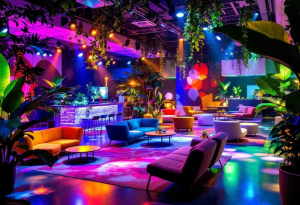
- Cultural design restraint: visual language matters. In 2026, the strongest venues avoid overwhelming neon chaos and instead use modern, clean systems—premium typography, controlled color, and respectful presentation.
- Regulatory compliance architecture: compliance is not a footer link; it’s a structural layer. Identity checks, geo-routing, and policy disclosures must be integrated without breaking the venue’s flow.
- Mobile-first flows: thumb-friendly controls, fast-loading lobbies, and cashier actions designed for intermittent connectivity are essential.
There’s also a trust factor in the region: users want proof, not promises. That pushes platforms to design interfaces that show receipts, states, and histories—making the venue feel governed by rules rather than vibes.
Section 6: The Future Blueprint: Predictions for Digital Entertainment Architecture Beyond 2026
If 2026 is the year crypto becomes structural in online gaming venues, the next phase is about intelligence and immersion—without losing legibility. I expect the most successful platforms to pursue innovation that still respects architectural fundamentals: orientation, safety, and coherent circulation.
Here are the blueprints I’m watching most closely beyond 2026:
- AI-driven personalization architecture: lobbies that rearrange based on user preferences, risk signals, and session intent—like a venue that subtly reconfigures its signage and room priorities for each guest.
- VR and spatial UI experiments: immersive venues will appear, but the winners will be the ones that carry over real-world wayfinding—clear “exits,” readable “cashier” zones, and minimal disorientation.
- Cross-platform ecosystem design: one identity, many rooms—casino, sportsbook, social features, and tournaments—unified by consistent transaction logic and wallet behavior.
- Decentralized venue components: more on-chain elements, provable game logic, and user-owned assets in some contexts. The architectural challenge will be blending decentralization with user-friendly support and dispute resolution.
My professional instinct, after years in architecture and sustainable design, is that the next evolution won’t be won by the flashiest graphics or the loudest promises. It will be won by the platforms that build crypto into the bones of the venue—then design the guest journey so clearly that the underlying complexity stays mostly invisible. In 2026, cryptocurrency isn’t just changing how people pay; it’s changing how digital entertainment venues are planned, structured, and experienced.
Hey, it's Ethan Bellweather here. For years, I've been neck-deep in the architecture and design scene. From my days at Read more

Hey, I'm Ethan Bellweather. I'm an architect obsessed with merging sustainable design with all the coolest tech. Forget just sticking Read more